Internationals

Companies

Language Schools

Clubs


Let’s be honest: Showing up to a new sports club where you don’t know anyone, don’t know the exact rules, and maybe don’t even speak the language can be intimidating. You might be hovering your thumb over the “Sign Up” button right now, hesitating.
We completely get it. But as the official platform connecting internationals to 7 of Denmark’s national sports federations, we also promise you this: The hardest part is simply walking through the door. Once you are inside, the Danish sports community is incredibly welcoming.
To help you shake off the nerves, here is a practical, step-by-step guide on what to expect and how to prepare for your very first practice in a Danish forening.
Step 1: Keep the Gear Simple
You do not need to buy a brand-new, expensive kit to try out a sport. Danish clubs are very pragmatic.
Step 2: Arrive 10 Minutes Early (and Find the ‘Træner’)
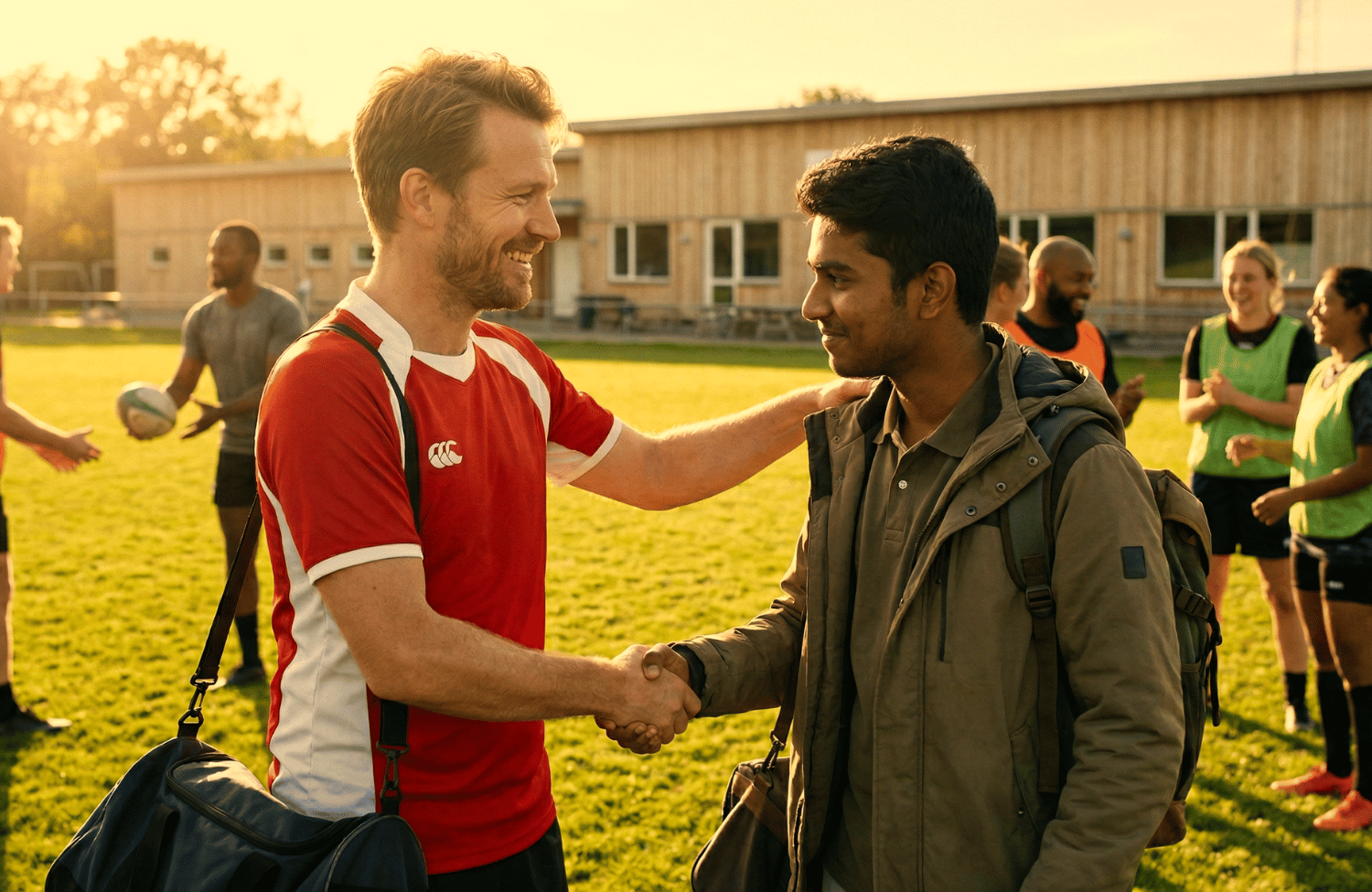
In Denmark, punctuality is a sign of respect. Aim to arrive about 10 minutes before the practice officially starts. When you arrive, look for the person carrying the equipment or wearing a slightly different jacket – that’s usually the coach (træneren). Walk up, introduce yourself, and tell them it’s your first time. They will instantly introduce you to a few veteran players who can guide you through the drills.
Step 3: Don’t Stress About the Language Barrier
“But what if they yell instructions in Danish?” Here is a reassuring fact: Danes are consistently ranked among the best non-native English speakers in the world. The moment the coach realizes there is an international player on the team, they will often switch to English or seamlessly translate the drills for you.
Tip: Learn a few basic sports phrases in Danish like “Bagfra!” (Man on/watch your back) or “Godt spillet” (Well played). Your teammates will love the effort!
Step 4: Embrace the Mistakes
A local sports club is not the Olympic tryouts. Whether you are throwing your first softball pitch or trying to figure out the rules of cricket, you are going to make mistakes. Laugh at them! Danish sports culture has a very flat hierarchy, and humor is a big part of the game. No one expects perfection on day one.
Step 5: Don’t Run Away When It’s Over!
As we’ve mentioned in other guides, the famous Tredje Halvleg (The Third Half) is crucial. When practice ends, don’t just grab your bag and sprint to the bus. Stay for 10 minutes. Help collect the balls, walk to the locker room, and have a quick chat with the people you just played with. That simple 10-minute investment is how you get invited to the next social event.
You are now fully prepped. Grab your indoor shoes and let’s get moving!