Internationals

Companies

Language Schools

Clubs


The Culture Code · Article 1 of 4
⏱ 7 min read🧭 The Culture CodeLearning Path
If you look up the Danish idiom “at løfte i flok”, the literal translation is “to lift in a flock”. It paints a picture of a heavy burden being effortlessly carried because many hands are lifting it at once. In Denmark, this is not just a cute saying; it is the fundamental cultural blueprint for how civil society is built.
To truly understand the unspoken social etiquette of a Danish sports club, you have to look past the physical activities and understand the structural DNA of the community itself. You need to understand the Danish Foreningsmodel (the association model).
It is a unique, deeply historical framework where communities organize themselves around a shared passion. It is fiercely democratic, inherently non-profit, and driven by the principle that no one single person owns the club, which means everyone owns the club.
“If you want to crack the code to Danish culture, and understand why your coach expects you to help carry the heavy goalposts across the pitch, this is where you start.”
The roots of this model, and the mindset of “lifting in a flock,” go back over a century. It didn’t start on a football pitch; it started in the fields.
The Danish Constitution officially secured forsamlingsfrihed. This gave everyday citizens the right to gather and form associations without asking the king or government for permission.
Farmers realized that if they pooled resources—lifting in a flock—they could build shared dairies. The core rule: One person, one vote. It didn’t matter how much land you owned.
This egalitarian mindset bled directly into leisure time. Today, there are over 80,000 associations in Denmark, functioning as thousands of tiny, independent democracies.
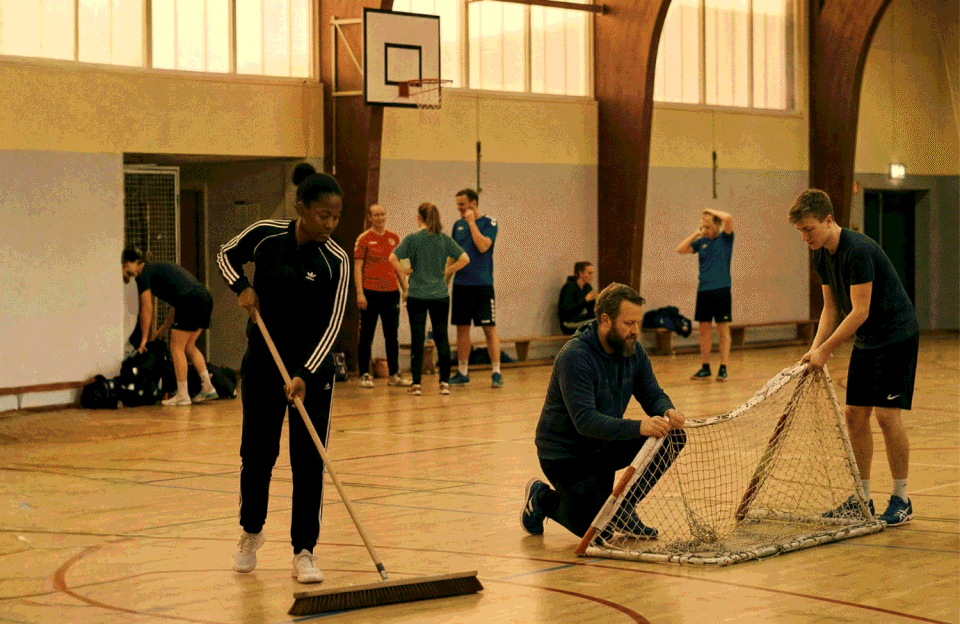
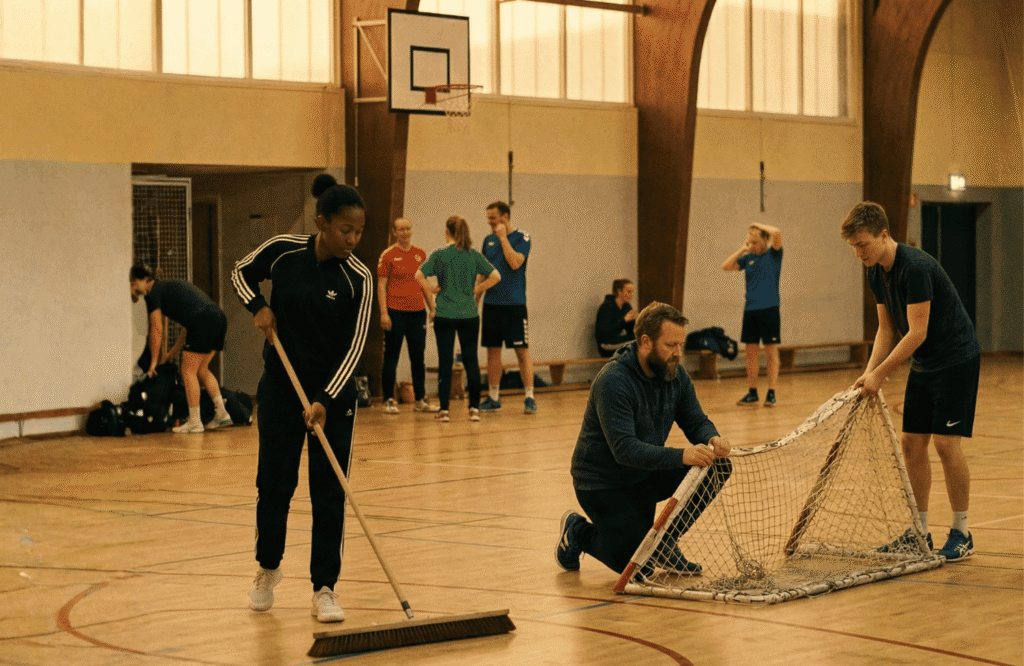
This rich history is exactly why the physical act of “lifting in a flock” is still so visible today. When practice ends, the magic of the Danish sports club begins. You don’t just bolt for the door. You grab a broom to sweep the sports hall. You help gather the cones. You carry the heavy bags of balls back to the equipment shed.
To an international citizen, this might feel like free manual labor. But in reality, it is team-building in disguise. When you carry the physical goals together, you are actively participating in a 150-year-old tradition of shared responsibility. It is the fastest way to prove you are invested in the community.
Because nobody owns the club, it has to be governed by the people who use it: The members. All the money generated—whether through membership fees, municipal subsidies, or selling sausages at a weekend match—must be reinvested directly back into the club to buy new equipment or host social events.
The absolute highest authority in any Danish sports club is not the head coach, nor is it the Club President. It is the Generalforsamling (The General Assembly).
Once a year, the club will invite all its members to this meeting. For many internationals, the instinct is to ignore the invitation. It sounds like a boring bureaucratic meeting filled with complex Danish financial terms. But skipping the General Assembly means missing out on the very essence of the forening.
This is where the flock decides the direction of the club. It is here that the budget is transparently presented, and members vote on whether to invest in a new clubhouse or start a new women’s team. Most importantly, this is where the Board of Directors (Bestyrelsen) is elected from a pool of volunteering members.
As we explored in the Blueprint series, understanding this model is crucial because it completely changes the expectations placed upon you as a newcomer.
I pay for a service at a commercial facility.
I expect the equipment to work flawlessly.
If the showers are cold, I write a bad review or complain to management.
If I want a social event, I wait for the staff to organize it.
I contribute to a democratic community.
I help maintain the shared equipment.
If the showers are cold, I volunteer to call a plumber on behalf of the club.
If I want a summer barbecue, I gather a few teammates and organize it.
To thrive in Denmark, you have to realize that society is not something that just happens to you; it is something you actively build.
“At løfte i flok” is the realization that the community is only as strong as the collective effort of its members. When you step into a Danish sports club and understand that you are now a voting, equal co-owner of a small democratic institution, the dynamic shifts. You are no longer just an international trying to fit in. You are a stakeholder. And pulling up a chair at the General Assembly is the ultimate insider move.