Internationals

Companies

Language Schools

Clubs


The Culture Code · Article 2 of 4
⏱ 7 min read🧭 The Culture CodeLearning Path
It is a dark Tuesday evening. You are standing outside the doors of the local sports hall, your gym bag slung over your shoulder. You can hear the squeak of indoor shoes, the bouncing of balls, and the rapid-fire sounds of fluent Danish echoing from the court. Your stomach ties itself in a knot. The thought screams in your head: “What am I doing here? I don’t speak a word of Danish.”
You slowly back away, text the coach a weak excuse about working late, and head home.
If this scenario sounds familiar, you are not alone. The language barrier is arguably the single biggest excuse internationals use to avoid joining local Danish sports clubs. The fear of being the awkward newcomer who forces an entire team to switch languages is deeply paralyzing.
But it is also entirely misplaced. Here is why your lack of Danish should never keep you off the pitch, and how the local club is actually your secret weapon to mastering the language.
First, take a deep breath and remember why you are there. You are not joining a local debate club; you are joining a sports team.
Sports have a universal language. When you are sprinting down the court in floorball, sweeping the ice in curling, or lunging for a shot in squash, communication is 90% physical. A high-five, a pointed finger, a nod, or eye contact before a pass transcends all language barriers. You do not need to know the Danish past-perfect tense to understand that your teammate is open for a pass.
Secondly, you are in Denmark. According to the EF English Proficiency Index, Danes consistently rank among the top non-native English-speaking populations in the world.
“If you walk into a club and say, “Hi, I’m new, and I only speak English,” the overwhelming majority of teams will seamlessly adapt.”
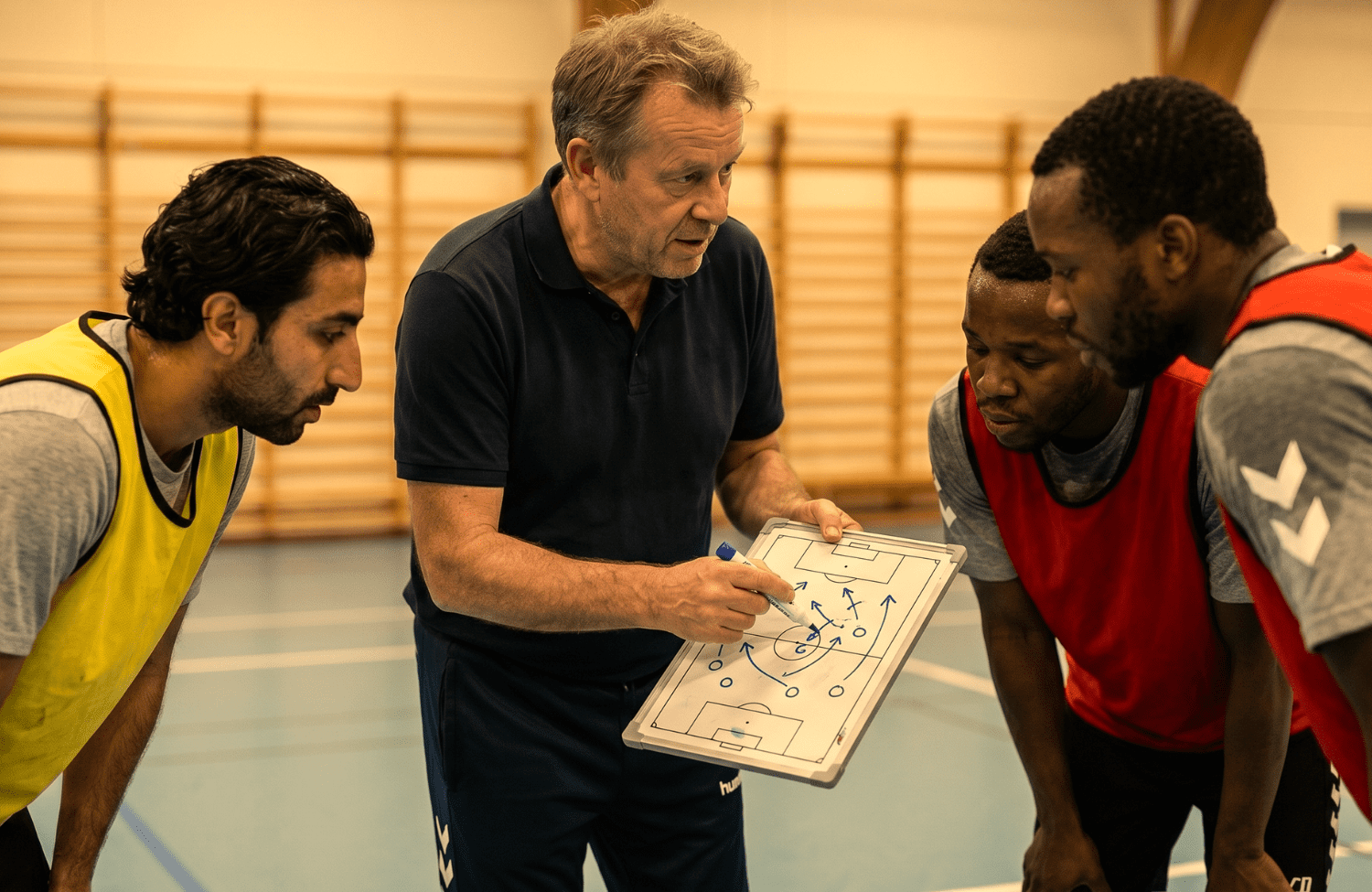
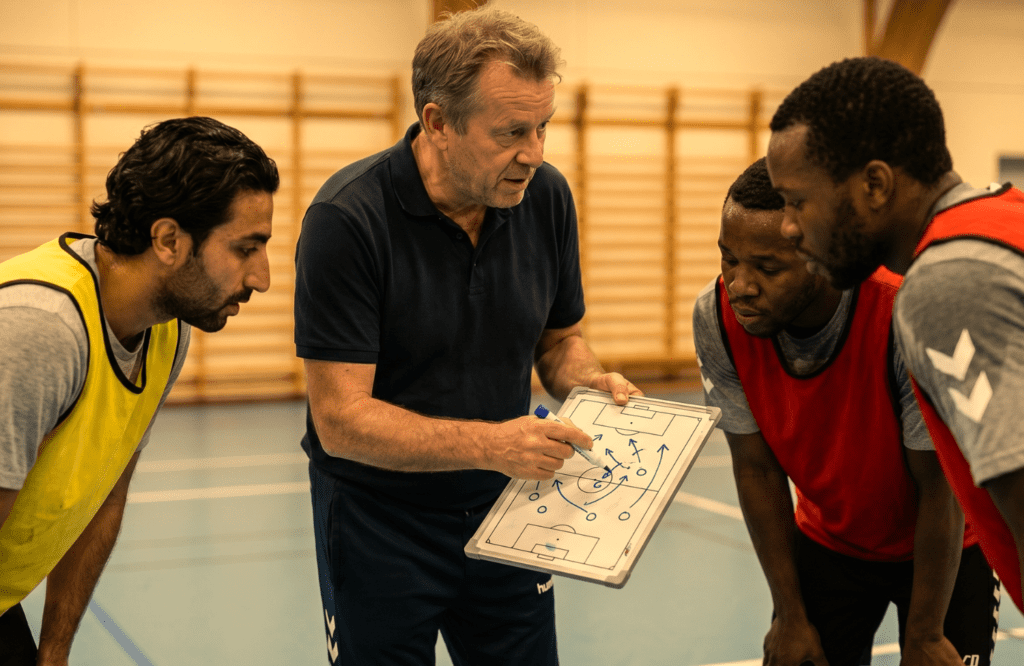
The coach will likely deliver instructions in Danish and then give you a quick 10-second summary in perfect English. Your teammates will gladly translate complex drills for you.
Danes are generally incredibly pragmatic. They want the practice to flow, and they want to win. If speaking English to you helps the team succeed, they will do it without a second thought.
However, while the English safety net is fantastic for your first few months, it can also become a trap. If you rely on it forever, you might find that you never truly penetrate the inner social circle.
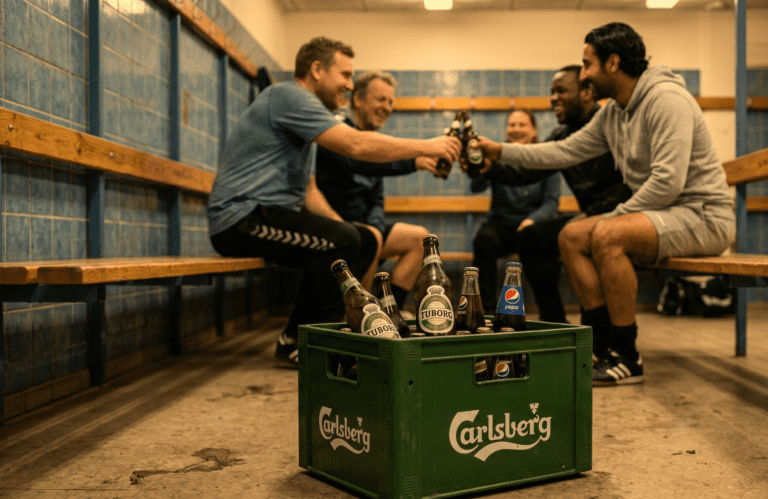
During the drills, English is fine. But when the practice is over, and the team sits down for the “3rd Half” in the locker room, the conversation will naturally revert to Danish. It is simply too exhausting for a group of locals to speak their second language during their downtime just for one person.
This is the exact moment many internationals feel isolated. But instead of retreating, this is where you apply the ultimate cultural cheat code: The Effort.
Danes do not expect you to speak perfect Danish. The language is notoriously difficult, filled with soft D’s, silent letters, and unique vowel sounds. They know this.
What they do care about is that you are trying.
If you learn just a few basic sports phrases, you will instantly win their respect. Using just a tiny bit of “Pitch Danish” shows vulnerability. It signals that you are willing to look a little foolish to be part of their culture.
Use this when your team is defending, or to hype up a teammate before a big play.
The mandatory sign of respect. Use this while shaking hands with the opponent or coach after practice.
When Danes see you making that effort, the proverbial coconut shell cracks. They will suddenly go out of their way to include you, slowly teaching you new words and cheering when you use them correctly.
Ask any international citizen who has successfully learned Danish, and they will tell you the same thing: The language school (sprogskole) is where you learn the grammar, but the sports club is where you actually learn the language.
In a professional business meeting, making a grammatical mistake in Danish can feel humiliating. It makes you feel incompetent. But in a sports club? No one cares. If you use the wrong gender for a noun while desperately calling for a pass, your teammates won’t judge your grammar—they will just pass you the ball. The vocabulary is limited, repetitive, and informal. It is a low-stakes environment where you are allowed to sound like a beginner while still being respected as an equal.
So, the next time you stand outside those doors, do not turn around. Walk in, smile, and say “Hej”. That is the only Danish word you need to get started.