Internationals

Companies

Language Schools

Clubs


You’ve been playing at your local Danish sports club for a few months. You pay your membership fee, you enjoy the practices, and you love the social life. But eventually, a thought crosses your mind: Who is actually in charge here?. If you look around for a CEO, a wealthy owner, or a school principal running the show, you won’t find one.
As the official gateway representing seven national Danish sports federations, we often get asked who really “owns” the local clubs. The answer is one of the most beautiful aspects of Danish culture: A Danish forening (association) is an independent, democratic organization. It is entirely owned and operated by its members—which means, if you pay your kontingent (membership fee), you are one of the bosses.
Here is a quick guide to how the unique Danish sports democracy actually works, and how you can go from being a regular player to shaping the future of your club.
The Highest Authority: ‘Generalforsamlingen’
Once a year, usually in the spring, the club hosts its Annual General Meeting, known as the Generalforsamling. This is the highest authority in the club. Every single member has the right to attend, and more importantly, everyone has a vote.
This is where the big decisions are made: Should the membership fee go up?. Should the club invest in new equipment? Should we host an international tournament this summer?. If you want a say in how your club is run, this is where you show up. And in true Danish fashion, the generalforsamling is rarely just a dry, formal meeting. It is almost always accompanied by free food, a few beers, or coffee and cake to ensure a high turnout and a good, hyggelig atmosphere.
The Everyday Heroes: ‘Bestyrelsen’
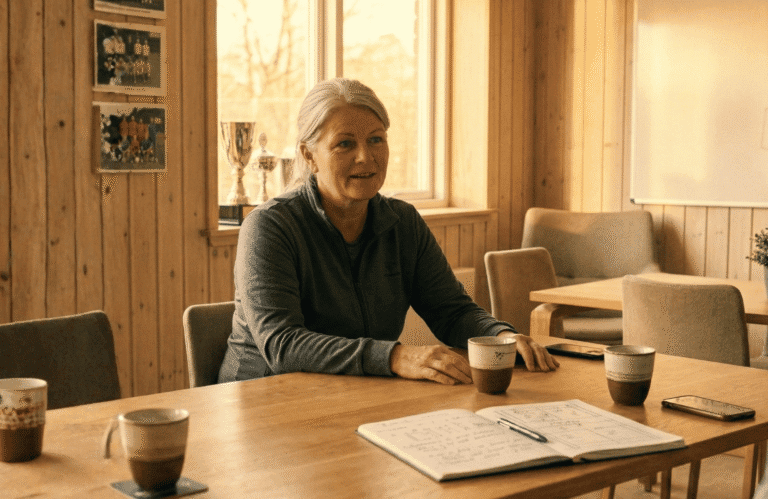
At the general assembly, the members elect a board of directors, called Bestyrelsen. The board usually consists of a chairperson (formand), a treasurer (kasserer), and a handful of regular board members.
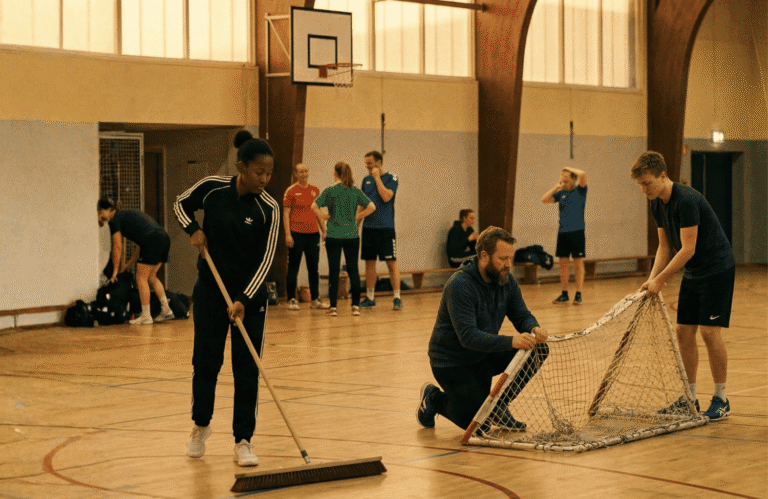
These are all volunteers—your fellow teammates or parents of youth players—who have agreed to handle the “boring” behind-the-scenes work. They pay the bills, communicate with the municipality to book practice times, and ensure the club’s finances are healthy. It is important to understand that the board members are not your “bosses”. They are facilitators who have been trusted by the community to keep the wheels turning.
Can an International Join the Board?
Absolutely! In fact, many Danish sports clubs—especially in internationally popular sports like cricket, rugby, and hockey—are actively looking for expats to join their boards. You might worry that your Danish isn’t good enough for official board meetings. However, a rapidly growing number of clubs are switching to English to accommodate their international members.
If joining the main board feels like too big of a commitment, you can always join a smaller committee (udvalg). Every club has a party committee (festudvalg) or a tournament committee where you can bring your ideas to life without having to worry about the club’s annual budget.
Your Voice Matters
Being part of a forening means you never have to settle for just being a consumer. If you want to change something, you actually have the power to do it. So, the next time you get an invitation to the Generalforsamling, don’t just delete the email. Show up, eat a piece of cake, cast your vote, and experience everyday Danish democracy in action.