Internationals

Companies

Language Schools

Clubs


Denmark is world-famous for its excellent work-life balance. Danes fiercely protect their free time, they leave the office at 16:00, and they value their weekends. So, it might seem like a paradox when you discover that hundreds of thousands of Danes spend their precious time off working for free at the local sports club. Why on earth do they do it?
As the official platform backed by seven national Danish sports federations, we see expats wrestle with this question every day. In Denmark, volunteering (frivilligt arbejde) is not just about charity or helping those in need. It is the very foundation of the society. When you join a local forening (sports club), you will inevitably be asked if you want to help out with a small task. Before you politely decline to protect your free time, you should know that volunteering is actually the most powerful tool you have as an international living in Denmark.
Here is why working for free can pay off massively.
1. The Ultimate CV Booster
If you are looking to advance your career in Denmark, your local sports club might be just as valuable as your LinkedIn profile. Being a volunteer shows that you understand Danish workplace values: teamwork, responsibility, and equality. In fact, surveys have shown that over 90% of Danish employers view experience from an association as a significant advantage when hiring. Putting “Volunteer Coach” or “Board Member at the local Rugby Club” on your CV tells a Danish hiring manager that you are integrated, proactive, and capable of collaborating in a Danish context.
2. Building Real Leadership Skills
A Danish sports club is a mini-democracy. If you volunteer to help organize a tournament, sit on a committee, or join the board (bestyrelsen), you will get a crash course in Danish management style. You will learn how decisions are made through consensus, how to motivate people who aren’t getting paid, and how to communicate across different cultures and ages. These are high-level soft skills that translate directly back to your professional life.
3. The Fast-Track from “Guest” to “Local”
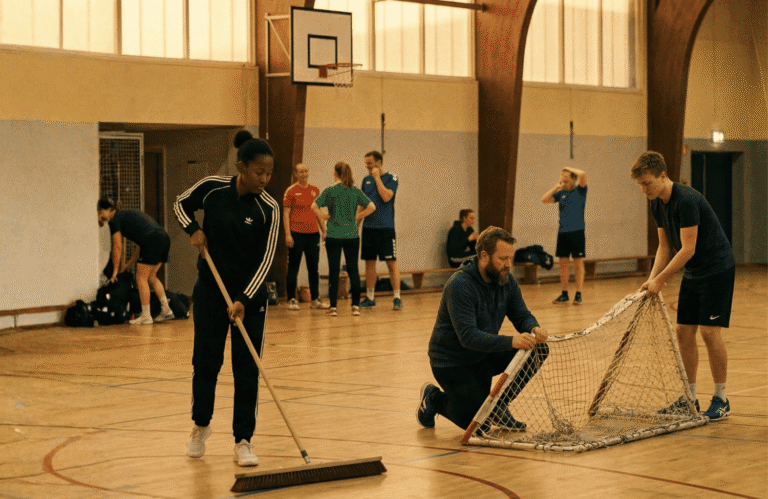
When you move to a new country, it is easy to get stuck in the “expat bubble,” only hanging out with international colleagues or people from your language school. Volunteering breaks that bubble instantly. When you step up and say, “I can help set up the floorball court,” or “I’ll organize the snacks for the cricket match,” you stop being a guest in the country. You become a contributor. It is the strongest signal you can send to your Danish teammates that you care about their community. In return, they will welcome you into their inner circle much faster than if you just show up to play and leave.
The Return on Investment
Yes, volunteering means giving away an hour or two of your free time. But the return on that investment—in the shape of a stronger professional network, deep friendships, and a stellar CV—is priceless.
Ready to build your network on and off the pitch?