Internationals

Companies

Language Schools

Clubs


The Blueprint · Article 1 of 4
⏱ 6 min read🧭 The BlueprintLearning Path
You probably already know the statistics. Year after year, Denmark ranks in the absolute top three of the World Happiness Report. Yet, if you ask the international community living here, a very different and puzzling picture sometimes emerges. Internationals often rank Denmark as one of the harder countries in the world to settle in and make local friends.
How can the happiest people on earth be so incredibly hard to get to know?
If you are currently feeling the sting of this paradox—if you have tried striking up a conversation at the bus stop only to be met with a surprised look, or if your attempts to invite colleagues out for drinks haven’t quite landed—take a deep breath. You are not doing anything wrong. You are simply trying to connect in places where Danes aren’t historically accustomed to socializing.
To understand how to naturally unlock Danish social circles, you first need to understand the fundamental architecture of Danish trust, the concept of the “coconut culture,” and your ultimate shortcut to the society: Foreningslivet.
The concept of “Peach vs. Coconut” cultures is a real sociological framework developed by cultural diversity experts Fons Trompenaars and Charles Hampden-Turner. It illustrates how different societies manage the boundary between their public and private lives, helping international citizens understand that a culturally “closed” exterior does not mean an unfriendly interior.
Cultural anthropologists often divide the world into two distinct relationship styles. Understanding which one you come from, and which one you are living in, changes everything.
Many internationals come from peach cultures (like the US, parts of Southern Europe, or Latin America). A peach is soft and sweet on the outside. People from these cultures are quick to smile at strangers, easy to talk to, and will happily share personal stories with someone they just met. However, once you get past that soft exterior, you hit a hard pit. Truly getting into their inner circle of close, lifelong friends can be surprisingly difficult.
Danes are coconuts. They have a hard, seemingly impenetrable outer shell. They rarely engage in spontaneous small talk at the supermarket, and often strictly separate their professional lives from their private lives. To an outsider, this shell can feel unwelcoming. But here is the secret: Once you finally manage to crack a Danish coconut, they are incredibly sweet, loyal, and warm on the inside. Once you are in, you are in for life.
“The million-dollar question is: How do you crack the shell? You don’t do it by forcing small talk. You do it by engaging in shared activities.”
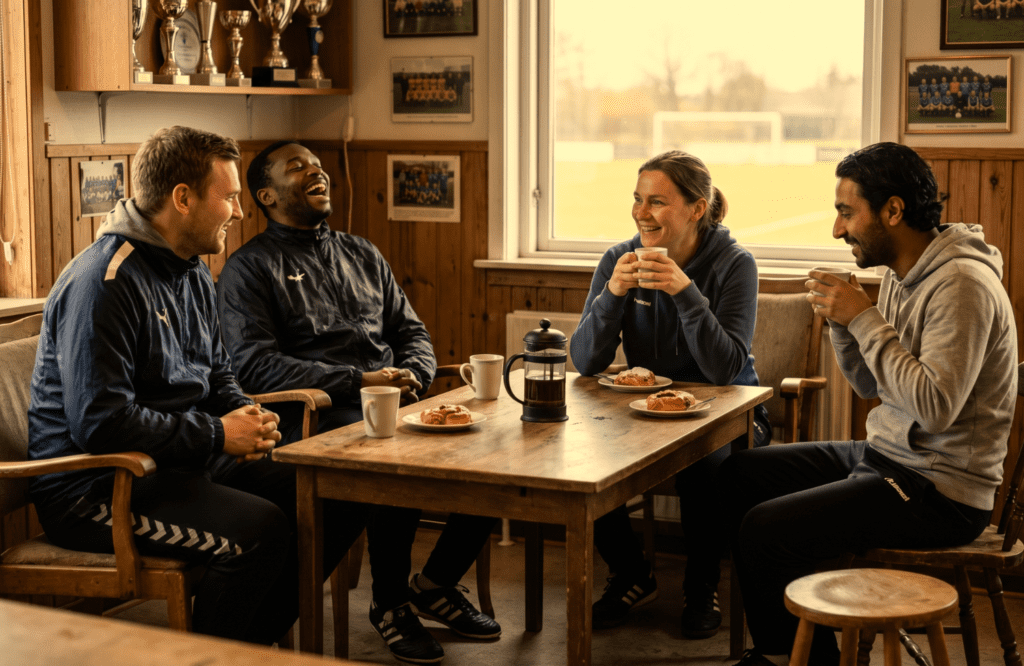
Danes bond over doing things together, not just talking together. This is where foreningslivet comes into play. It is the social engine of the country, and it is the exact place where the coconut shell naturally softens.
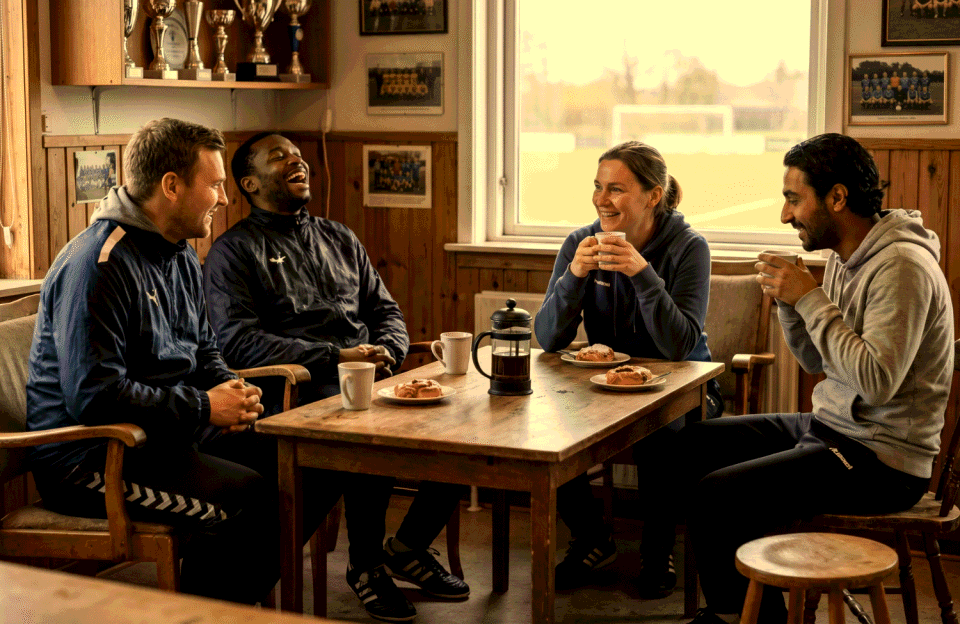
A forening is a non-profit, democratic, volunteer-run association. There are over 80,000 active associations in Denmark covering everything from sports and music to board games and winter bathing. When you join a local floorball, softball, or cricket club, you are stepping directly into a pre-established community.
Legally and structurally, a forening translates to an “association.” However, in everyday English, “sports association” can sound overly bureaucratic. When we talk about the physical teams and communities you join, we often use the term “sports club.” Both terms describe the exact same, volunteer-driven Danish community model.
Cracking the Danish code requires an understanding of this specific model. Your local club is your social anchor. It is the place where you will meet people outside your immediate international bubble, practice your Danish in a safe environment, and find your fastest ticket to understanding the locals.
In the next parts of this Blueprint series, we will dive deeper into how this model functions—exploring how a club differs from a commercial gym, where your membership fees actually go, and how to navigate the famously informal Danish team hierarchy.