Internationals

Companies

Language Schools

Clubs


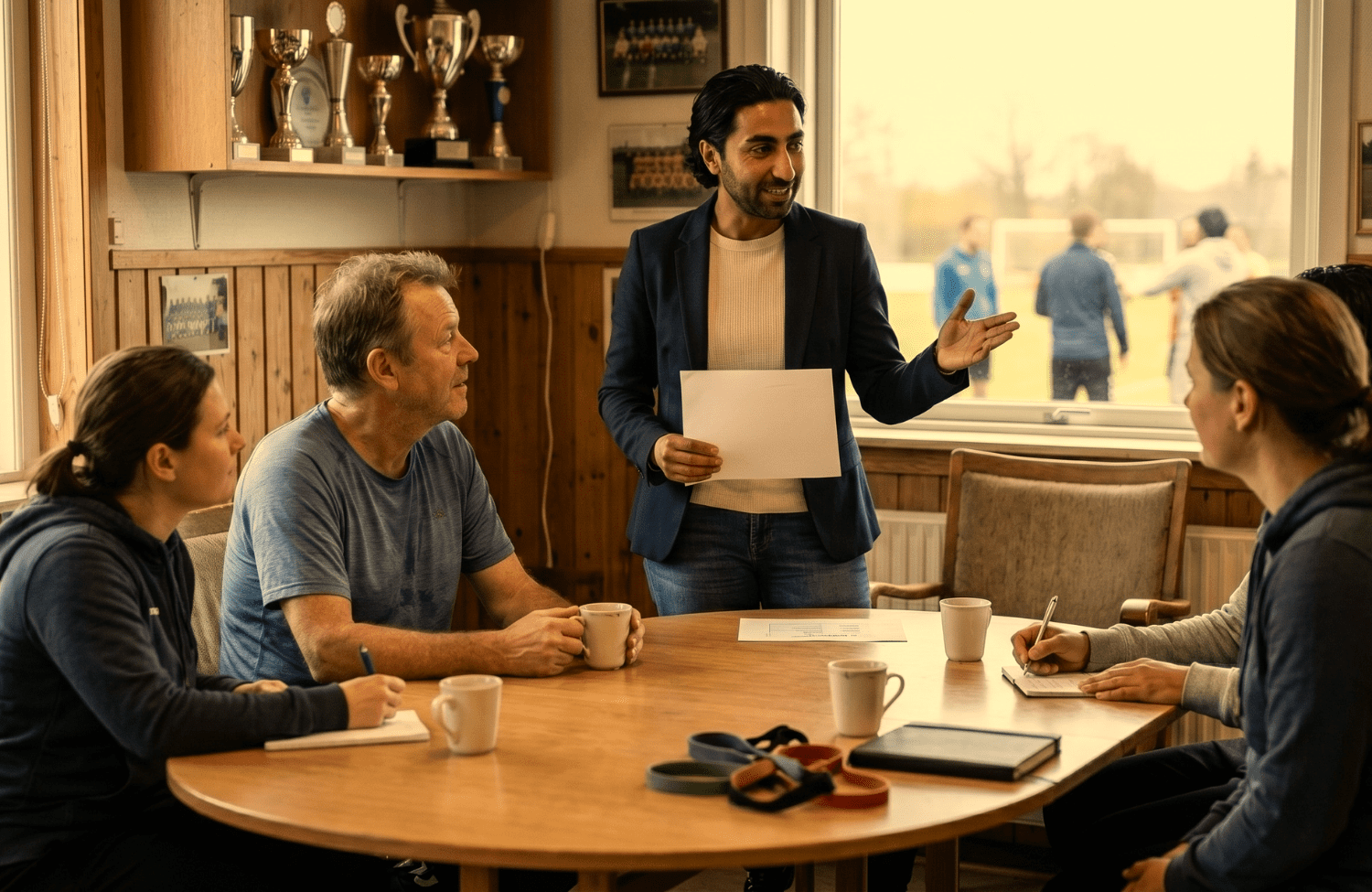
The Heart of the Club · Article 3 of 4
⏱ 7 min read🧭 The Heart of the ClubLearning Path
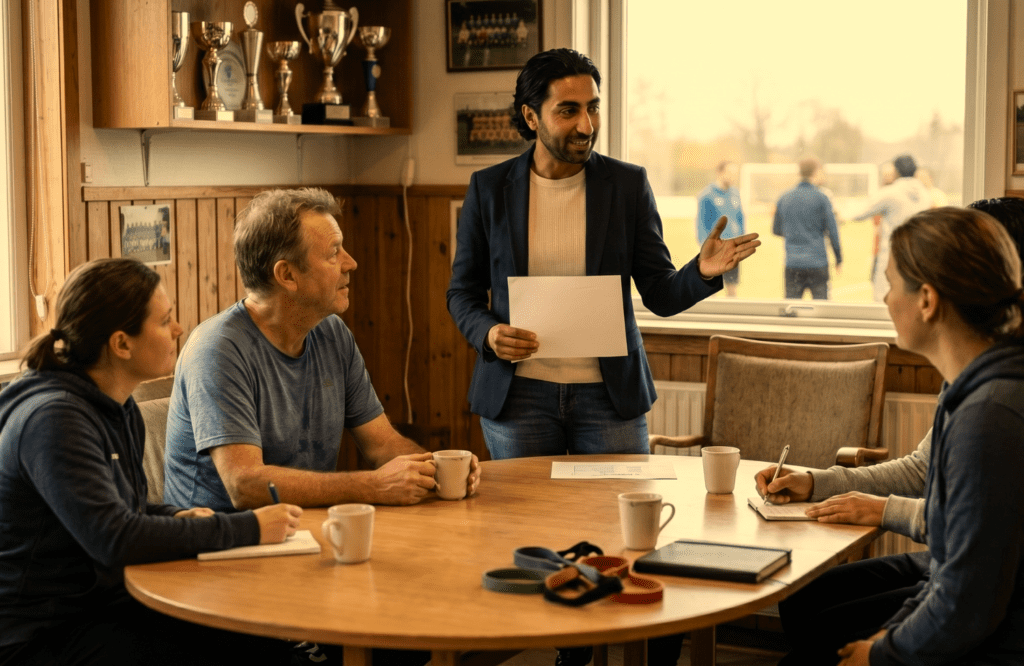
You have been a member of your local sports club for a year. You pay your ‘kontingent’ on time, you bring cake when it’s your turn, and you even know the Danish word for referee (dommer). You feel settled. But then, an email drops into your inbox: An invitation to the annual Generalforsamling (General Assembly).
For many international citizens, this email goes straight to the trash bin. It sounds like a boring, bureaucratic meeting strictly reserved for the “inner circle” of the club—the native Danes who have been running the show for twenty years.
This is the biggest misconception you can have about Danish civil society.
In the corporate world, the boardroom is a closed fortress. You have to climb a grueling ladder for decades just to get a peek inside. In a Danish sports club, the boardroom doors are wide open, and the people inside are practically begging you to come in. Here is why the Danish concept of medlemsdemokrati (member democracy) is your ultimate fast track to leadership and influence.
If you come from a country where power is concentrated at the top and closely guarded by an elite few, the Danish club structure will baffle you.
The Board of Directors is an exclusive, untouchable group of elites fiercely guarding their power.
Hover to reveal Danish Reality ➔The board is made up of ordinary members who stepped up because someone had to. They are actively praying someone new volunteers to relieve them.
In a sports club, leadership is not a privilege fiercely guarded by the elite; it is a shared burden generously handed to anyone willing to help.
To understand your own power, you need to remember that a sports club has no owner. It is a pure democracy. The General Assembly is the absolute highest authority in the club.
When you show up to this annual meeting (which usually involves free coffee, cake, and maybe a beer), you do not sit there as a passive consumer. You sit there as a shareholder with full voting rights. It is the principle of “one member, one vote.”
“Do you think the club’s website should be translated into English? Propose it and vote for it. Do you want the club to host more social events? Take the floor.”
The Danish medlemsdemokrati is incredibly pragmatic. If you have a good idea and are willing to put a little bit of effort into executing it, the club will almost certainly say: “Great idea! Go for it.”
But why would a Danish club want an international newcomer on their board? Because you have exactly what they lack: Fresh eyes and professional skills.
Many local clubs struggle with outdated administration. They are run by passionate sports lovers, not marketing experts or accountants. This is where your unique superpower comes into play. You don’t need to be a tactical genius in squash or field hockey to sit on the board. You just need to bring the skills you already use from 9 to 5.
If you work in IT, the club desperately needs you to modernize their membership system. If you work in marketing, they need you to run their social media to attract new members. If you work in finance, the Treasurer would weep with joy if you offered to help optimize the budget.
Your professional skills are a massive, untapped goldmine for the club. And bringing an international perspective into the boardroom ensures that the club becomes more inclusive for the next generation of arrivals.
Stepping up from a regular member to a board member (bestyrelsesmedlem) or even Club President (Formand) is not just an act of charity. It is a strategic career move.
Local Danish Sports Club (Frivillig)
Cultural Fluency: Demonstrates a deep understanding of the Danish democratic process and flat hierarchy.
Leadership: Proves the ability to manage, motivate, and collaborate with volunteers—which is notably harder than managing paid employees.
Commitment: Shows future employers that you are actively invested in Danish society and plan on staying long-term.
When you put that title on your LinkedIn profile, it resonates deeply with Danish employers. It proves critical “soft skills” that a regular corporate job title simply cannot convey.
Integration is often described as a passive process—something that slowly happens to you over time as you learn the language and eat enough rye bread.
But true integration is active. It happens the moment you stop asking, “What can this country do for me?” and start asking, “How do we want to run our club?”
The transition from a paying member to the President of a Danish association can happen in less than a year. All it takes is showing up to the General Assembly, eating a piece of cake, and raising your hand when they ask for volunteers. The seat at the head of the table is empty. It’s time for you to take it.