Internationals

Companies

Language Schools

Clubs


The Heart of the Club · Article 4 of 4
⏱ 7 min read🧭 The Heart of the ClubLearning Path
It’s a beautiful Friday afternoon in April. Spring has finally arrived in Denmark. You are looking forward to a relaxing weekend when an email from the club’s board drops into your inbox.
The subject line reads: “Invitation til Arbejdsdag” (Invitation to Work Day). You open the email and read the translation: “Dear members, the new season is approaching. We need everyone to show up tomorrow at 09:00 AM. Bring work gloves. We will be painting the clubhouse, fixing the nets, and pulling weeds around the pitches.”
Your international brain instantly short-circuits. You pay your membership fee every six months. Why on earth is the club asking you to do free manual labor on your weekend? Isn’t there a janitor for this? Isn’t there a municipal budget? You strongly consider deleting the email, turning off your phone, and sleeping in.
“Do not delete that email. Put on your oldest pair of jeans, grab some work gloves, and set your alarm. The Arbejdsdag is the best-kept social secret in Danish grassroots sports.”
The first thing you need to understand about the Arbejdsdag is that the actual amount of “work” being done is highly exaggerated.
If you are imagining a grueling, military-style boot camp where a supervisor yells at you for not painting fast enough, you can relax. The pace of a Danish work day is notoriously slow. It is punctuated by frequent coffee breaks, leaning on brooms while chatting, and long discussions about the best way to assemble a new field hockey goal.
You do not need to be a skilled carpenter, a plumber, or a master gardener to participate. The tasks are deliberately designed so that anyone can help. If you don’t know how to repair a hole in the roof, you can carry a trash bag. If you don’t want to carry a trash bag, you can wash the windows. If you hate cleaning, you can be the person who brews the coffee and hands out the traditional morning rundstykker (bread rolls).
Showing up is 90% of the job. The remaining 10% is just moving your hands while you talk.
Everyone gathers in the clubhouse. Before a single tool is touched, the club provides coffee, fresh bread rolls, butter, and jam. You sit and chat for the first 45 minutes.
You grab a paintbrush or a broom. The work is unhurried. You pair up with teammates and spend more time talking about the upcoming season than actually painting.
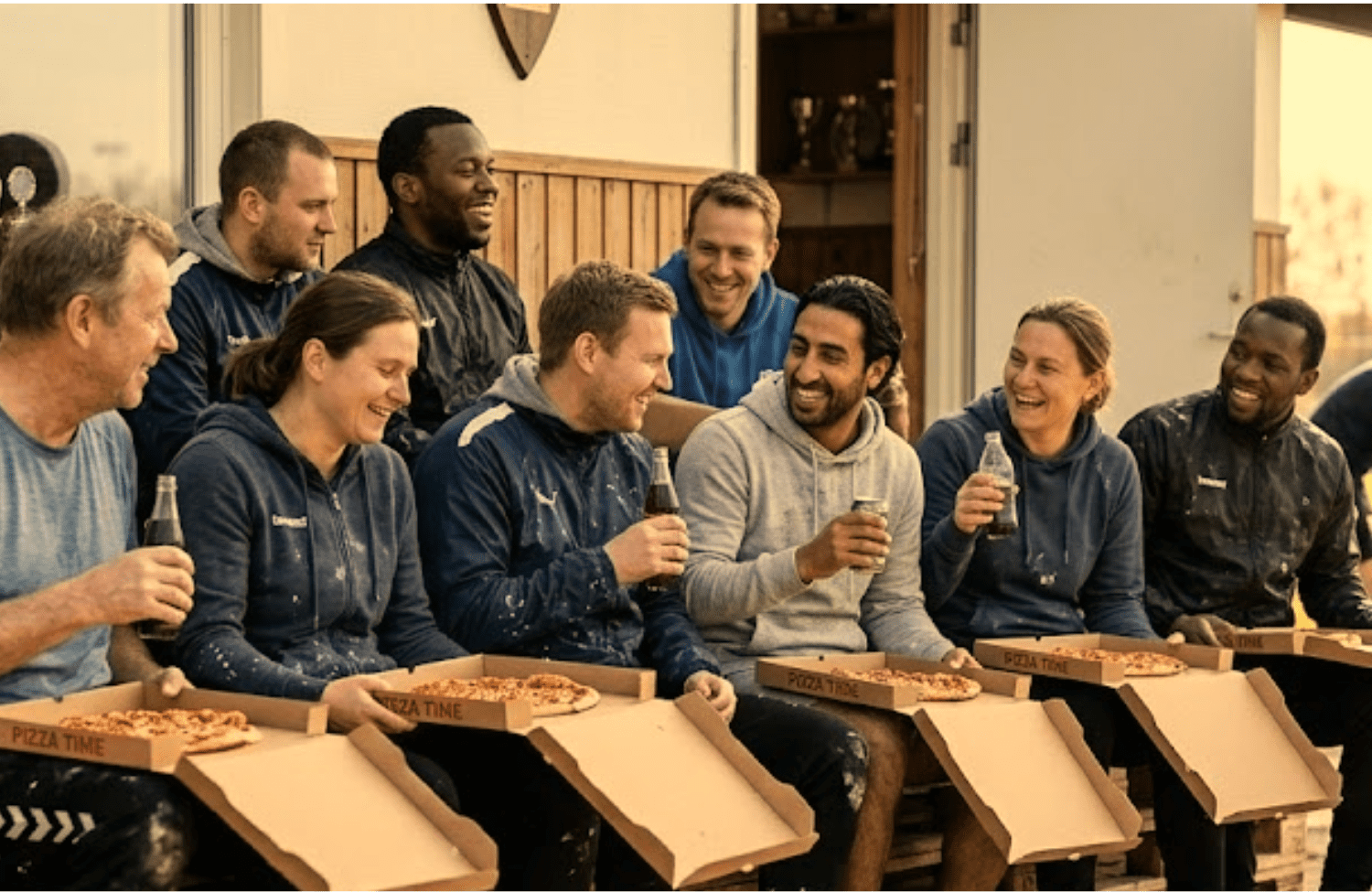
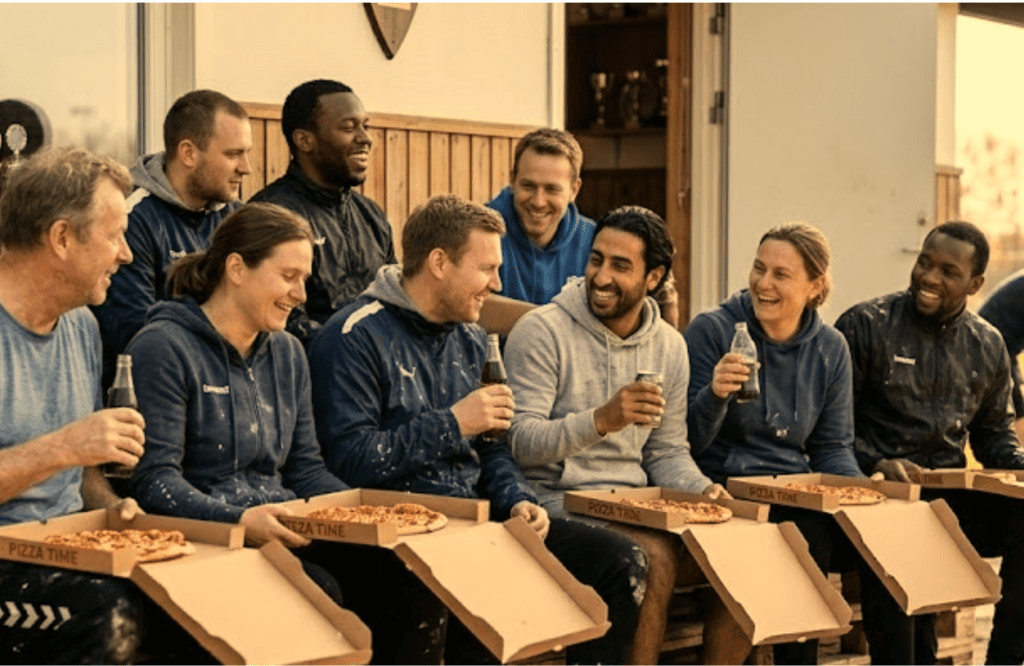
The tools go back in the shed. The board orders stacks of warm pizzas and opens crates of cold sodas and beers. The manual labor is over, and the social reward begins.
Why do Danish clubs insist on making their members do this? Aside from the practical reality that non-profit clubs cannot afford to hire professional contractors for everything, the Arbejdsdag serves a much deeper cultural purpose. It is the ultimate social equalizer.
There is something profoundly humbling about physical labor. When the CEO of a local tech company, a university student, and a newly arrived international citizen are all wearing paint-splattered sweatpants and struggling to carry a heavy bench together, all societal armor is stripped away. You are no longer defined by your job title, your income, or your language skills. You are simply three people trying not to drop a bench.
Shared effort builds trust. When you sweat alongside a Danish local, the infamous “coconut shell” cracks wide open. The Arbejdsdag creates an environment where small talk happens organically because your hands are busy, and the pressure of maintaining eye contact is gone.
When you sit on that bench with a slice of pizza, looking at the fence you just helped paint, you cross a psychological threshold. You are no longer a consumer of the club’s facilities; you are an owner. Every time you walk past that fence for the rest of the season, you will feel a tiny spark of pride.
By giving up four hours of your Saturday, you prove to the locals that you are committed to the flock. You didn’t just come to take; you came to contribute. And in Denmark, the people who show up for the Arbejdsdag are the people who get invited to the dinner parties. So grab a paintbrush—your new network is waiting.