Internationals

Companies

Language Schools

Clubs



The Blueprint · Article 2 of 4
⏱ 7 min read🧭 The BlueprintLearning Path

Picture this: It’s Tuesday evening. You swipe your keycard at a brightly lit, commercial gym. You put on your noise-canceling headphones, step onto the treadmill, run for 45 minutes, shower, and leave. You interacted with exactly zero people. If the treadmill was broken, you complained to the teenager at the front desk. You pay your monthly subscription, so you expect flawless service.
This is the transactional nature of the commercial fitness world. It is comfortable, predictable, and requires absolutely zero social or emotional investment.
But if you bring this exact “customer mindset” into a local Danish sports club — a forening— you are going to crash headfirst into a cultural wall. To thrive in Danish grassroots sports, you need to unlearn the habits of a consumer and embrace the responsibilities of a co-owner.
“Here is why leaving your inner customer at the door is the most important mindset shift you will make in Denmark.”
One of the most common traps for international citizens is the membership fee. When you join a local sports club, you pay a “kontingent” (membership fee) – normally every half-year.
To the international brain, a transaction has just occurred: I paid money, therefore the club is now my service provider. The coach is my instructor, and the board members are the management.
In Denmark, local sports clubs are 100% non-profit, democratic organizations. They are not businesses designed to make money. The fee you pay doesn’t go toward generating profit for an invisible owner; it goes directly into paying for the balls, the referee fees, and keeping the lights on.
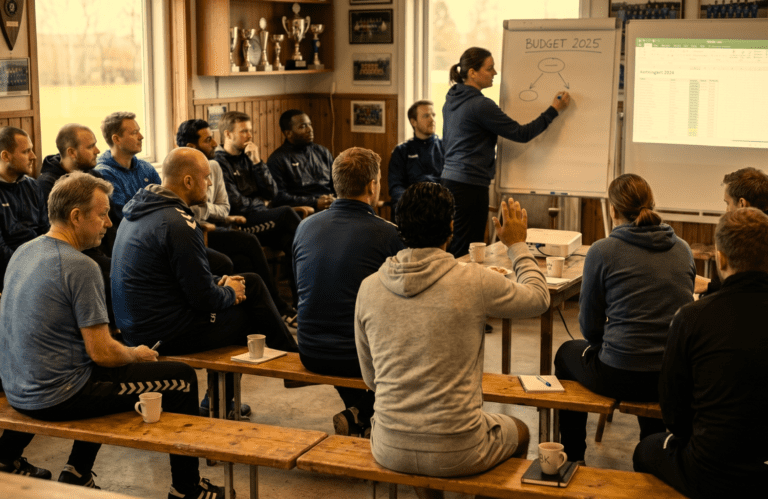
The people running the club — the president, the treasurer, the person washing the jerseys — are almost certainly volunteers. They have full-time jobs, families, and busy lives, just like you. They are doing this for free because they love the sport and the community.
To understand the difference, let’s look at a practical example.
Imagine you show up for floorball practice, and the net on one of the goals has a massive tear in it. How do you react?
Action: You cross your arms, find the coach, and say, “Excuse me, I pay my membership fee. Why hasn’t management fixed this goal? This is unacceptable.”
Result: If you act like a demanding customer towards a volunteer who is sacrificing their Tuesday evening to train you, you will instantly alienate yourself.
Action: You realize you are management. The club is a democracy, and the equipment belongs equally to everyone. Instead of complaining, you say, “Hey guys, the goal net is torn. Does anyone have some sports tape for a quick fix tonight, and should I volunteer to email the board about ordering a new net tomorrow?”
Result: By acting like a co-owner who takes responsibility for the shared equipment, you earn immediate, deep-seated respect.
This shared ownership extends beyond just the equipment. It defines the entire culture.
In a commercial gym, you leave your towel on the floor, knowing a cleaner is paid to pick it up. In a forening, the members are the cleaners. When practice ends, the magic happens. You don’t just bolt for the door. You grab a broom to sweep the sports hall. You help gather the cones. You carry the heavy bags of balls back to the equipment shed.
Occasionally, the club will host an Arbejdsdag (Work Day) on a weekend. The members will gather to paint the clubhouse, clean the locker rooms, or weed the areas around the pitches.
To someone unaccustomed to the system, giving up a Saturday morning to do free manual labor sounds like a terrible deal. But to a Dane, an Arbejdsdag is a core social event. It usually ends with the club buying pizza and beers for everyone who helped out. It is during these hours—with a paintbrush in one hand and a slice of pizza in the other—that you stop being “the new international” and become “one of us.”
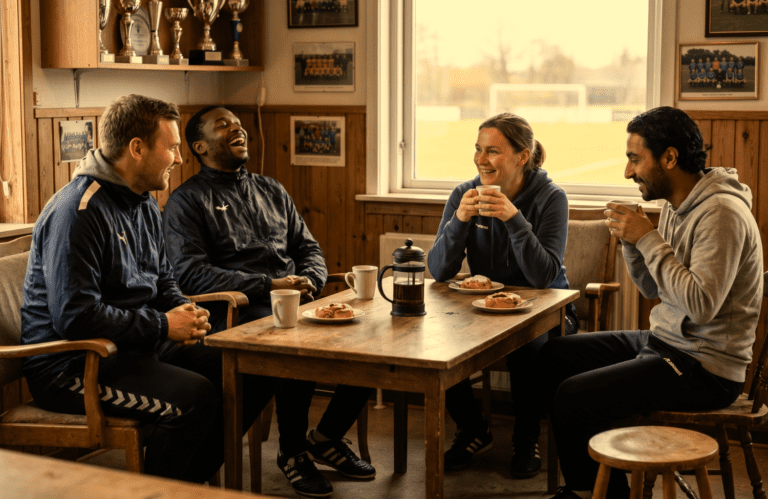
Making the shift from customer to co-owner requires checking your ego at the door. It means accepting that things won’t always be perfectly polished. The coffee in the clubhouse might be weak, the locker rooms might be outdated, and the communication might sometimes be a chaotic thread in a Facebook group.
But what you lose in commercial perfection, you gain in genuine connection.
A gym is a place you go to build your muscles. A forening is a place you go to build your life in Denmark. When you stop demanding a service and start contributing to a community, the entire country opens up to you. So next time you see a stray ball after practice, don’t walk past it. Pick it up. It’s your club, after all.
In Part 3 of the Blueprint series, we will unpack exactly what happens to that membership fee, ensuring full transparency into the finances of your new local club.