Internationals

Companies

Language Schools

Clubs


The Culture Code · Article 4 of 4
⏱ 6 min read🧭 The Culture CodeLearning Path
You have done everything right. You showed up on time, you passed the ball, you helped sweep the floor, and you even survived the communal showers. Now, fully dressed and feeling a sense of athletic accomplishment, you zip up your sports bag. You check your watch. It’s 21:30. Time to head home, prep tomorrow’s lunch, and get to bed. You wave to your teammates, say “See you next week,” and walk out the door.
Stop! Turn around. Put the bag down.
You are about to make a major networking mistake. By leaving the minute the physical exertion is over, you are missing out on the most important part of Danish sports culture: Tredje Halvleg (The 3rd Half). This is the exact moment where the elusive concept of hygge happens, and it is the primary place where the famous Danish coconut shell truly cracks open.
In Denmark, a rugby match or a field hockey tournament does not end when the referee blows the final whistle or when the coach dismisses the team. It ends when the last drop of soda or beer has been consumed in the locker room or the clubhouse.
The 3rd Half is an institution. It is a dedicated, unhurried space of time strictly reserved for socializing.
For many internationals, this is a difficult transition. We are conditioned to view sports as a healthy, productive transaction: Burn 600 calories, shower, and get on with the rest of your busy life. Sitting on a hard wooden bench in a locker room for 30 minutes, drinking a calorie-heavy beer or a sugary soda, seems completely counterproductive to the concept of fitness.
“But in a Danish sports club, you aren’t just there to train your muscles. You are there to train your social ties.”
If you consistently skip the 3rd Half, you will remain a polite stranger. You will be “the international who plays well,” but you will never become “a part of the team.”
When international citizens read about hygge in glossy magazines, it usually looks a certain way. But the reality in a local sports club is delightfully different.
Lit candles, thick wool socks, a roaring fireplace, and a warm cup of herbal tea while watching the snow fall outside.
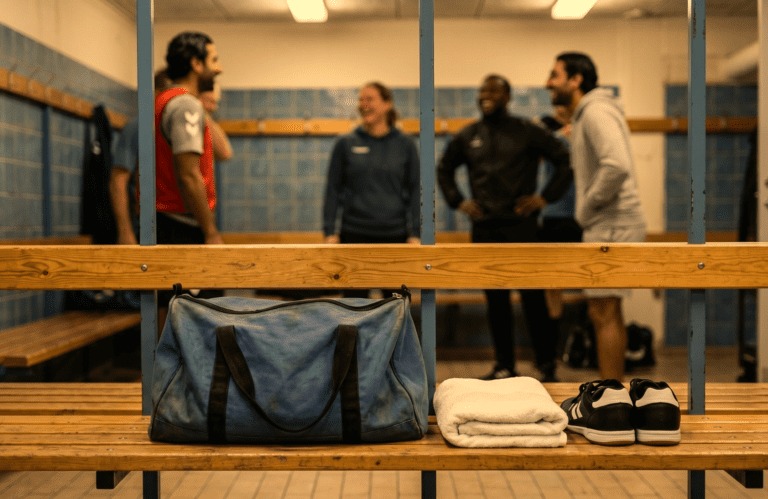
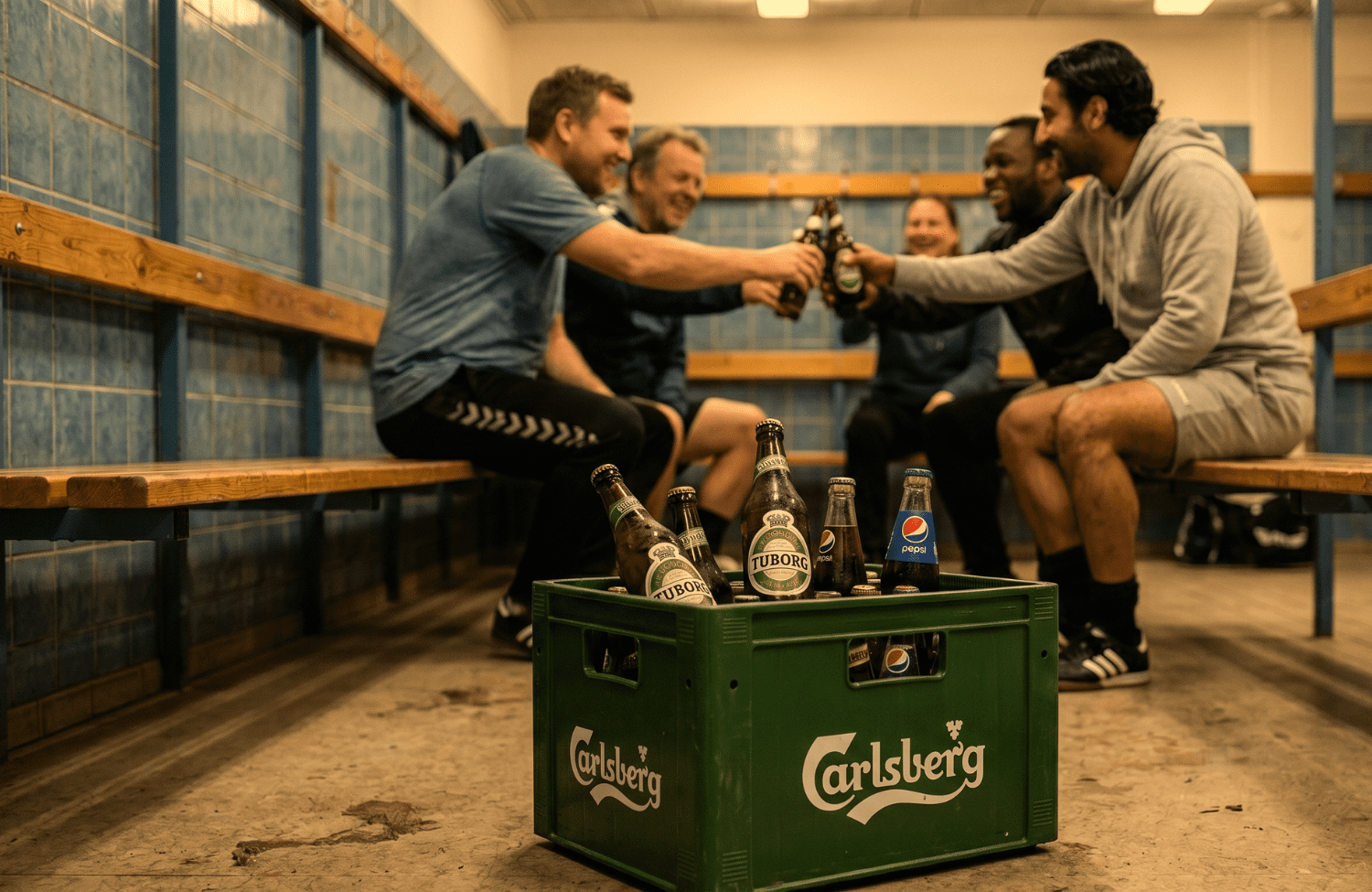
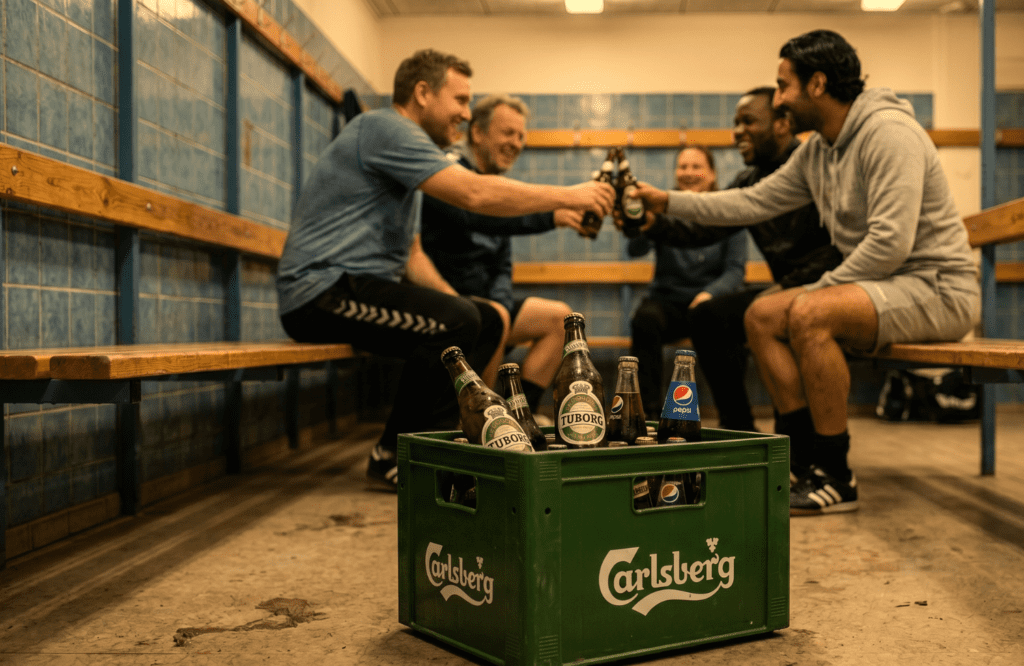
Harsh fluorescent lighting, the faint smell of sweat and muscle rub, sitting on an incredibly uncomfortable wooden bench with a lukewarm sports soda.
Yet, this locker room scenario is the purest form of Danish coziness. The magic lies in the complete lack of pretension. During the 3rd Half, the conversation flows freely. This is where you complain about the referee, tease each other about a missed shot, or casually bring up the fact that you are struggling to find a new apartment. Because everyone is relaxed and the adrenaline of the game has faded, the professional and social barriers are completely down.
It is also incredibly low-key. The 3rd Half is not a wild frat party. It usually involves exactly one green Tuborg or Carlsberg pilsner, or a classic Danish Faxe Kondi (a lemon-lime sports soda). It lasts 20 to 40 minutes. It’s a micro-social event that fits perfectly into a busy adult schedule.
To truly succeed in Denmark, you have to build buffer time into your schedule. When practice ends at 21:00, do not plan to be out the door at 21:15. Plan to be there until 21:45.
Accept the cold drink when it’s handed to you (soda or beer, both are equally fine). Ask your teammate sitting next to you how their weekend was. And when the crate is empty, volunteer to carry it back to the clubhouse. That half-hour on a wooden bench is the best investment you will ever make in your new Danish life.