Internationals

Companies

Language Schools

Clubs


The Practical Prep · Article 1 of 4
⏱ 7 min read🧭 The Practical PrepLearning Path
You did it. You found a local club on Sport in Denmark, you gathered the courage to send an email to the coach, and you got a friendly, if slightly brief, reply: “Great! We practice on Tuesdays at 18:00 in Hall B. Just show up.”
Now it is Tuesday at 17:55. You are sitting in your car or locking your bike outside the sports facility. Your heart is beating a little faster than usual. It is entirely normal to feel a sudden, overwhelming urge to turn around, go home, and watch Netflix instead. Walking into a pre-established group of locals where everyone already knows each other feels exactly like the first day of high school.
But take a deep breath. Every single person in that club was the “new player” at some point. If you can survive the first 15 minutes of awkwardness, you will unlock the best community Denmark has to offer.
“Here is your practical survival guide to conquering Day 1 and making a flawless first impression.”
The first major culture shock happens the second you walk through the main doors. If you are used to commercial gyms, you will instinctively look for a reception desk, a front-of-house manager, or a bright sign that says “New Members Start Here.”
You won’t find one.
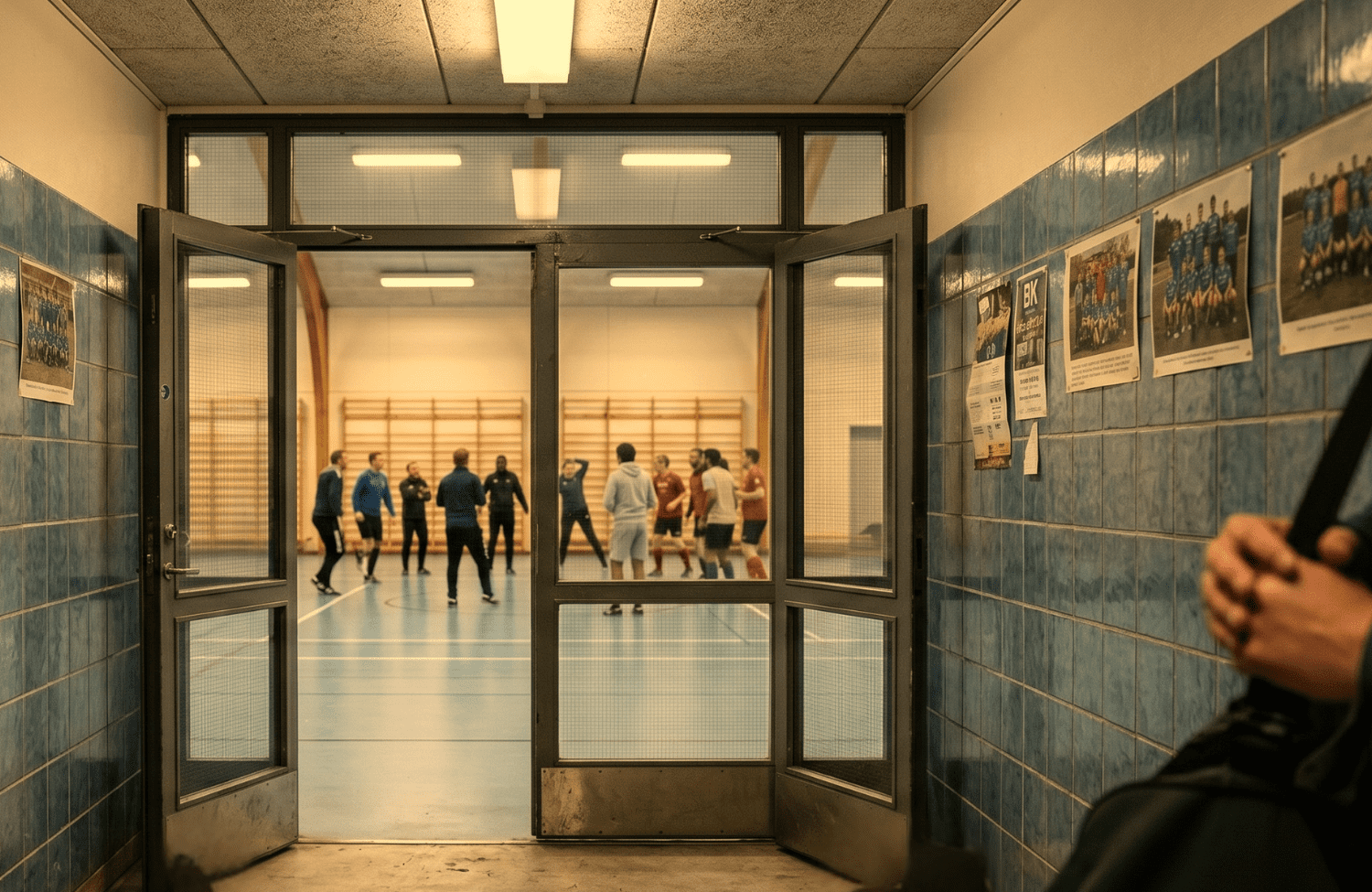
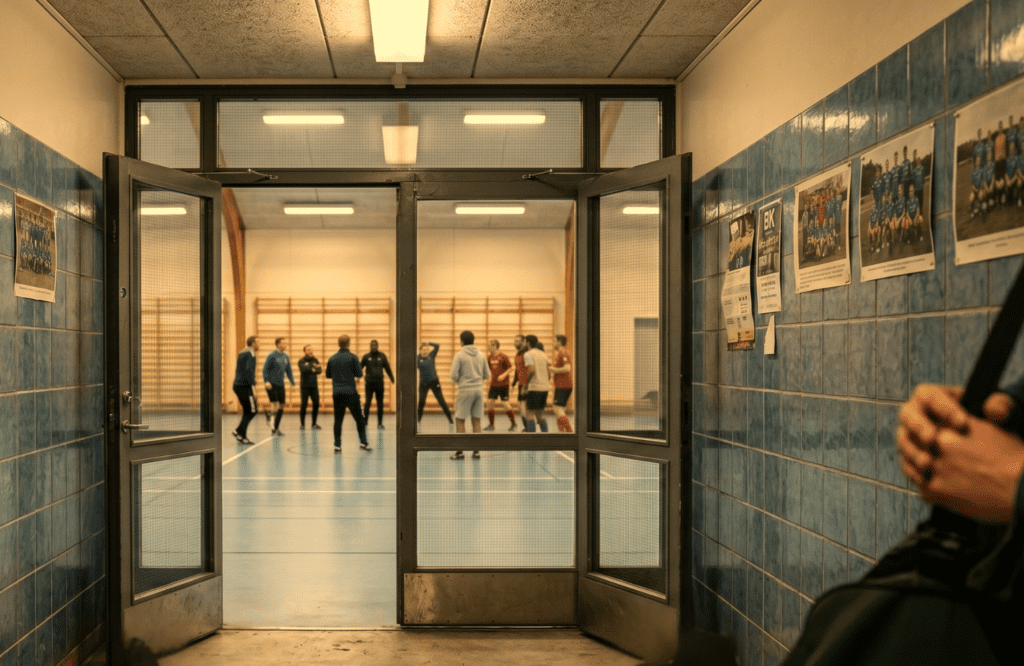
Danish sports clubs are run by volunteers, not paid staff. The facilities are usually owned by the local municipality, which means the entrance area often looks like a long, slightly chaotic school hallway lined with notice boards, forgotten water bottles, and closed locker room doors. There is no one there to hold your hand, scan your card, or give you a guided tour.
Embrace the chaos. Walk confidently past the entrance and head straight for the locker rooms (omklædningsrum) or the designated pitch. You do not need permission or a keycard to enter the public facility.
Once you find the right hall or pitch, you need to locate the person in charge. Again, forget your commercial expectations. The coach will likely not be standing in the middle of the room with a clipboard, wearing a whistle and a matching tracksuit, waiting to formally greet newcomers.
The coach is a volunteer who likely just rushed directly from their day job. They are probably the person in the corner struggling to untangle a net, pumping up flat rugby balls, or carrying a heavy bag of bats for baseball practice.
Don’t wait to be noticed. Danes respect proactive behavior. Walk up to the person sorting the equipment (or anyone who looks somewhat organized), extend your hand, smile, and say: “Hej, my name is [Name]. I emailed you about joining the practice today.”
If you arrive early and head into the locker room to change, you will likely face the famous Danish social reserve. When you walk in, the room might go quiet for a second, or people might just glance at you and continue their conversations in rapid Danish.
Do not mistake this for unfriendliness. As we learned in the Culture Code, they are coconuts. They just don’t know you yet, and Danes rarely initiate small talk with strangers to avoid being intrusive.
The burden of the icebreaker is on you. When you walk in, make eye contact and deliver a loud, collective “Hej!” to the room. When you sit down, extend your hand to the person next to you. A simple “I’m new here, I just moved from [Country]” is all it takes for the locals to switch to English and welcome you.
Many international citizens put immense pressure on themselves to perform flawlessly on Day 1. They think, “If I play like a superstar, they will accept me.” While showing solid skills is always a plus, it is not what the club cares about the most.
Do you stay positive when the coach asks you to play out of position, or do you let it affect your mood?
Do you shake it off when you miss a shot or make a mistake, or do you get visibly frustrated?
Do you actively sprint back to help the defense, or do you only put in the work when you are attacking?
Play hard, but play with a smile. If you make a mistake, raise your hand, say “My bad!” and keep running. Effort and a positive attitude will win you far more respect on Day 1 than arrogant perfection.
Finally, practice is over. You survived. You are sweaty, exhausted, and probably experiencing a bit of cultural fatigue from navigating a new environment. Your instinct will be to pack your bag, shout a quick goodbye, and escape to the safety of your home.
Do not leave immediately. Stick around for the transition to the 3rd Half. Help gather the cones without being asked. Walk into the locker room with the team. Take a shower. If someone offers you a cold drink, accept it. Sit on the bench for just 15 minutes.
Day 1 is about crossing the threshold. You walked in as a stranger, but if you sit on that bench and share a post-practice conversation, you will walk out as a teammate. You survived. Now, the fun begins.