Internationals

Companies

Language Schools

Clubs


The Practical Prep · Article 3 of 4
⏱ 6 min read🧭 The Practical PrepLearning Path
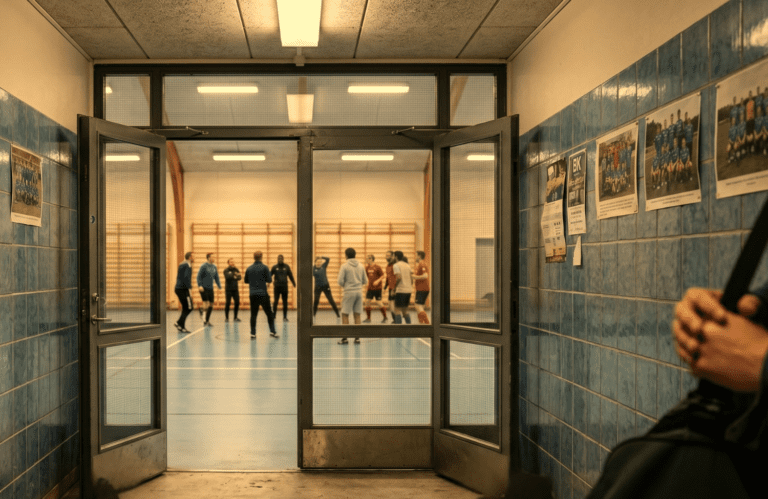
Imagine this: You have just arrived for your very first floorball practice. You are a little late, so you decide to skip the locker room. You are already wearing your gym clothes and your favorite, expensive running shoes. You jog through the entrance, open the heavy double doors to the sports hall, and step confidently onto the shiny wooden floor.
Suddenly, the music stops. The squeaking of shoes halts. Fifteen Danish teammates turn to stare at you with wide eyes. From the corner of the hall, a person you have never seen before drops a broom and marches toward you with a look of pure, unadulterated horror.
“UD!” (OUT!), they shout, pointing a furious finger back at the hallway.
What just happened? You didn’t insult anyone. You didn’t break any equipment. But you just committed the ultimate, unforgivable cardinal sin of Danish sports: You walked onto an indoor court wearing your street shoes.
If you want to survive in a Danish sports club without becoming a local legend for all the wrong reasons, you need to understand the sacred rule of Indendørssko (Indoor shoes), and you need to meet the guardian of the floor.
To understand why Danes are so fiercely protective of their sports hall floors, you must remember the Danish sports model. As we have covered in earlier articles, the clubs themselves rarely own the buildings; the local municipality (kommunen) does.
These sports halls cost millions of kroner to build and maintain. The floors are highly specialized, shock-absorbing surfaces designed to protect the athletes’ joints, meticulously varnished to provide the exact right amount of friction.
To protect this investment, the municipality employs a Halinspektør (Hall Manager or Caretaker). The Halinspektør is the undisputed ruler of the building. They spend hours every single day sweeping, polishing, and maintaining that floor. To them, the floor is a work of art. And when you walk onto it with the shoes you just wore on the street, you are vandalizing their masterpiece.
Many international citizens think the rule is just about avoiding wet mud or dog poop on the court. They will often argue, “But I drove here! I only walked from my car to the door. My shoes are perfectly clean!”
This argument will not save you.
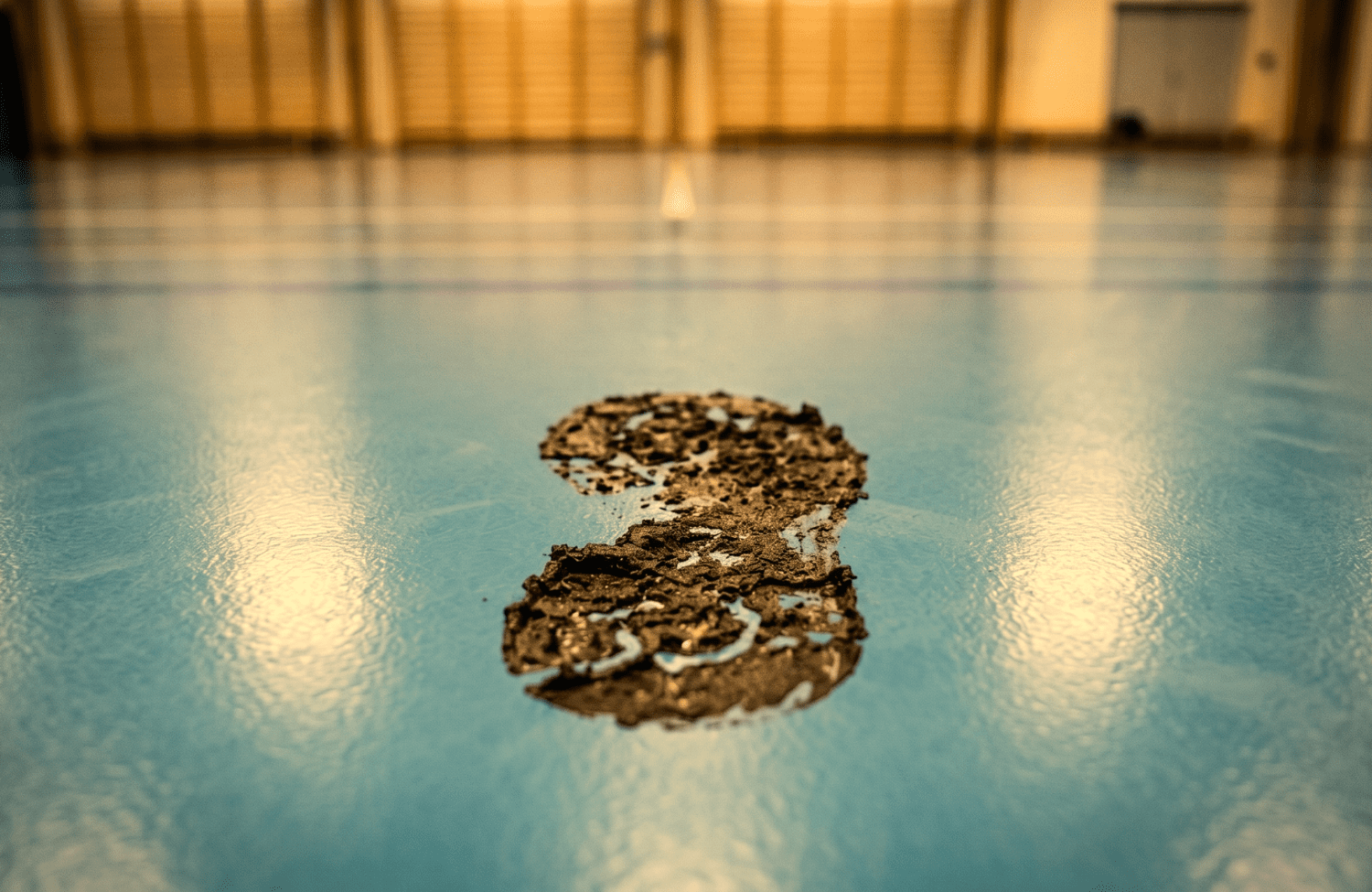
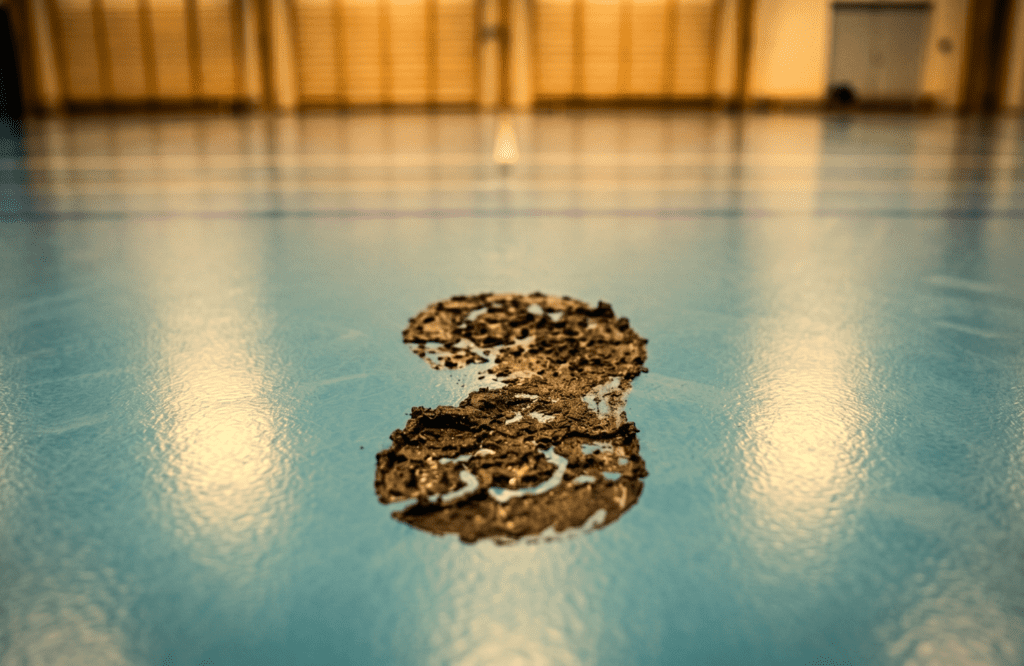
The primary enemy of the indoor floor is not visible mud; it is microscopic gravel, sand, and tiny stones that stick to the grooves of your soles the moment you step onto Danish asphalt. When you bring those invisible stones onto the court and start running, your shoes act like coarse sandpaper. You are literally grinding away the expensive top layer of the varnish.
Furthermore, many regular street shoes have dark rubber soles. When you drag your foot across a polyurethane floor, these soles leave long, black scuff marks that look like tire tracks. The Halinspektør has to scrub these off by hand on their hands and knees. If you cause them, you will not make any friends.
So, how do you comply with the rule? You must invest in a pair of dedicated indendørssko (indoor shoes).
“When buying these shoes, the most important term to look for is ‘Non-Marking’.”
This means the sole is made from a specific type of rubber (often light brown, white, or specifically treated colored rubber) that does not leave streaks on the floor, regardless of how hard you brake or slide.
These shoes must never touch the outdoors. Not even for a quick jog to the car to grab your forgotten water bottle. The moment they touch the pavement, they are compromised.
The correct protocol for a Danish sports hall is a strict, two-zone system.
This includes the parking lot, the main entrance, the hallways, and the locker room (omklædningsrum).
Wear: Street Shoes or BootsThis is the sports hall itself. The transition happens exclusively on the benches immediately outside the hall doors.
Wear: Non-Marking Indoor ShoesUltimately, the strict “Indoor Shoes ONLY” policy is another expression of the Danish foreningsliv mentality: Respecting the collective property.
When you bring clean shoes, you are showing respect for the municipality that built the hall, respect for the caretaker who maintains it, and respect for your teammates who have to safely dive, slide, and run on that floor every week.
So, leave your running shoes in the hallway, buy a pair with a non-marking sole, and step onto the court. The floor—and the Halinspektør—will thank you.