
Internationals

Companies

Language Schools

Clubs


The Blueprint · Article 4 of 4
⏱ 8 min read🧭 The BlueprintLearning Path
Imagine you have just relocated to Denmark. You are a Senior Director at a major international pharmaceutical company. You manage a team of 40 people, you hold a prestigious degree, and you are used to people addressing you with a certain level of professional deference.
On a rainy Tuesday evening, you show up for your first practice at the local squash club. You walk up to the coach, extend your hand, and confidently introduce yourself, making sure to casually drop your impressive job title into the conversation.
The coach, a 24-year-old student named Mads who is volunteering his time, shakes your hand, smiles, and says: “Cool. Grab a racket, you’re on court number three. And can you help carry this basket of balls?”
Enter the great Danish equalizer: The Flat Hierarchy.
If you come from a culture where social status, wealth, or job titles dictate how people treat you, stepping into a Danish sports club can induce a sudden moment of cultural surprise. But understanding and embracing this extreme egalitarianism is the key to unlocking true Danish friendships.
The flat hierarchy in Danish sports is heavily influenced by Janteloven (The Law of Jante). Coined by author Aksel Sandemose in 1933, it informally describes the Nordic cultural focus on collective success over individual elevation. The core philosophy is simple: No one individual is inherently better or more important than the rest of the community.
Denmark is broadly known for its flat workplace hierarchies, but in a local sports club, this concept is taken to its absolute extreme.
When you strip off your suit or your lab coat and put on a slightly faded, sweat-wicking training shirt, your socio-economic status vanishes. The locker room is the great equalizer. The person tying their shoes to your left might be a plumber; the person filling their water bottle to your right might be the CEO of a bank.
“Inside the club, no one cares what you do from 9 to 5. What matters is who you are from 5 to 7.”
Do you show up on time? Do you pass the ball? Do you complain when it rains, or do you encourage the team? Are you willing to help carry the heavy equipment back to the shed?
If you try to assert dominance or command respect by subtly flexing your wealth or professional status, it will usually backfire. In Denmark, flashing your title in a casual setting isn’t seen as impressive; it is often perceived as socially insecure.
This flat hierarchy also extends to how authority figures are treated. In many parts of the world, a sports coach is treated like an infallible general. You address them as “Sir,” “Coach,” or “Mr. Smith.” You do exactly what they say without questioning it.
In a Danish sports club, the coach is just… Henrik. Or Pernille.
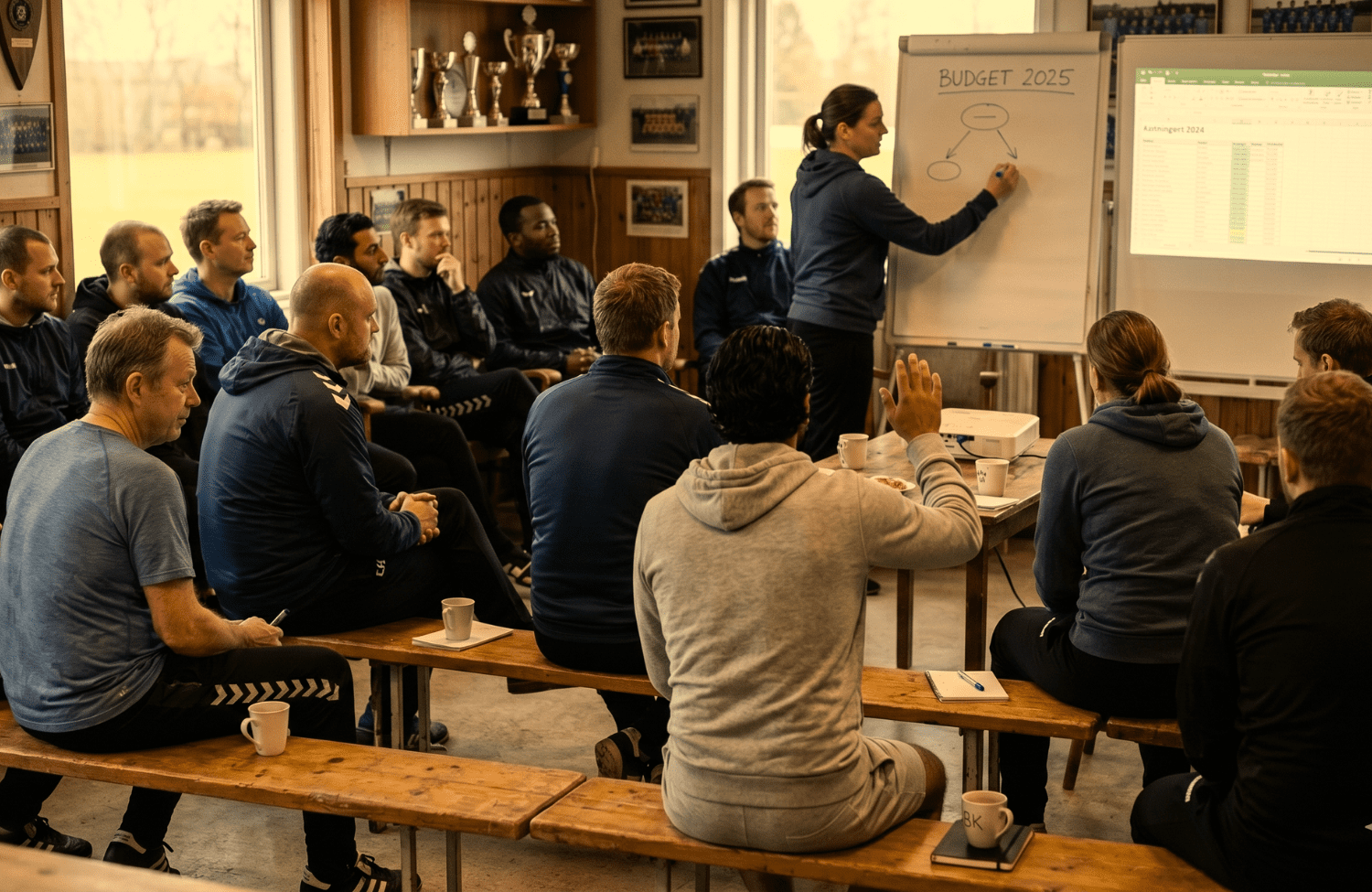
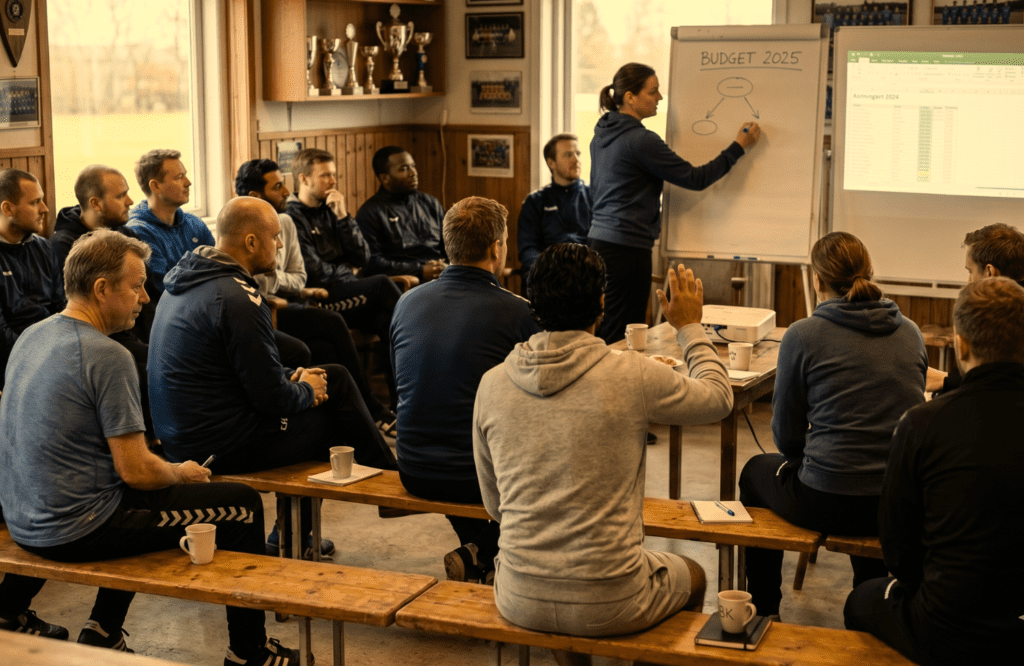
To someone used to strict hierarchies, this might look like a lack of discipline. To a Dane, it is the definition of a healthy, democratic team environment. Everyone’s opinion holds value, and the coach is seen as a peer who simply has the responsibility of coordinating the session.
For some internationals, losing the protective armor of their professional title can feel intimidating at first. If you can’t use your impressive CV to gain respect, how do you prove your worth?
You prove it through character and effort. You earn respect by volunteering to bring the washing machine bag home. You earn it by staying behind for the “3rd Half” to chat with your teammates. You earn it by treating the 18-year-old high schooler and the 60-year-old veteran with the exact same level of genuine curiosity.
Ultimately, the flat hierarchy is not a challenge to overcome; it is an incredible relief. For a few hours a week, you don’t have to be a manager, an employee, an international, or a breadwinner. You get to leave the stress of your professional identity at the locker room door.
You get to just be you. And that is exactly who your new Danish teammates want to meet.